
About
Restore Eden is a conservation governance design practice. We work with large ecosystem projects globally, from diagnosis through full project development. The problem we address isn't a lack of conservation intent or ecological knowledge. It's a failure of governance architecture. Our practice is built on a single proposition: governance must precede finance, legitimacy must precede enforcement, and integration must precede scale. We design the systems that make conservation hold.
Contact US
Who is Restore Eden?
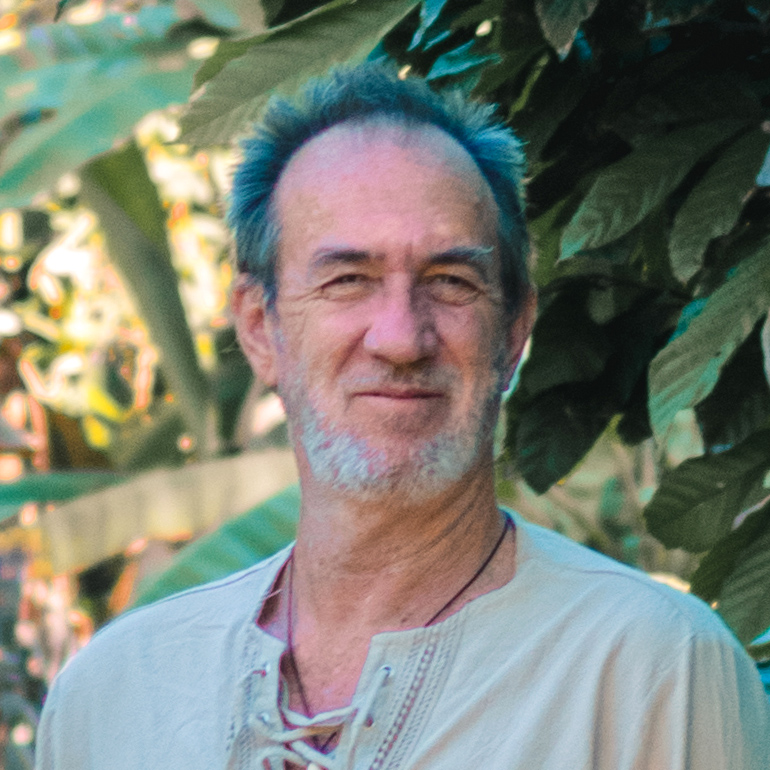
Robert Primmer | FOUNDER
Rob Primmer is the founder of Restore Eden, a conservation governance design practice built on thirty years of field experience across five continents. His work sits at the intersection of complex adaptive systems theory, polycentric governance, and conservation finance, focused on a single problem: why ecologically sound conservation projects fail, and how to design governance architectures that prevent it.
His career began in the Okavango Delta managing a community wildlife concession, moved through Vietnam where he led protected area proclamations and trained over 4,000 rangers nationwide, and has since spanned program design and evaluation work with USAID, REDD+ implementation in Mozambique, and institutional capacity building across West Africa, Southeast Asia, and the Caribbean. His most formative project cost $20,000 a year and recovered a critically endangered primate population from 50 to over 160 individuals by building on community governance systems that were already in place.
Rob holds a zoology degree from the University of Cape Town and an LLM in Environmental Law and Management from Aberystwyth University. He is the architect of the Conservation Governance Diagnostic, a structured analytical tool used to identify structural risks in conservation project design before capital is deployed.
He is based in Samaná Bay, Dominican Republic, where Restore Eden's flagship engagement is building the governance architecture for a ridge-to-reef stewardship initiative across one of the Caribbean's most ecologically significant systems.
The Specialist Network
Restore Eden operates as a lead practice that assembles specialist teams around the specific technical demands of each engagement. The practice brings in depth across ecological disciplines — terrestrial and marine biodiversity survey and monitoring, acoustic ecology, remote sensing and MRV, blue carbon and biodiversity credit methodology, ecosystem service valuation, complex adaptive systems analysis, ethnoecology, and conservation finance structuring — and coordinates that depth under a single governance design logic.
This model reflects a deliberate position: the lead architect needs to be fluent across ecological and institutional domains to hold the design integrity of a complex programme. The technical specialists need to be genuine authorities in their fields. Bringing those together around a shared governance sequencing framework is what makes the difference between a project that delivers reports and one that holds ground.
Associates and specialist collaborators include expertise in polycentric governance and resilience theory, ethnoecology and traditional ecological knowledge, ocean and coastal economics, and large landscape conservation finance. We draw on that network selectively, based on what each system requires.